Judy Bluehorse Skelton

Judy Bluehorse Skelton

The Buffalo

with Judy Bluehorse Skelton

[audio:https://www.wisdomoftheelders.org/s2_progs/207_sl.mp3]

Arlie Neskahi:
The buffalo and Native people have experienced much change since Lewis and Clark first encountered them in 1804. Long immortalized in books, artwork and films, the horse and buffalo culture of the Plains tribes still capture the imagination of people today. For many years, the U.S. nickel memorialized both the Indian and the buffalo. Visitors to Yellowstone Park continue to feel a sense of awe when they catch their first glimpse of buffalo grazing in the meadow.

On today’s Sacred Landscapes, Judy Bluehorse Skelton talks about the changing landscapes that are bringing Native people and the buffalo back to the Great Plains.
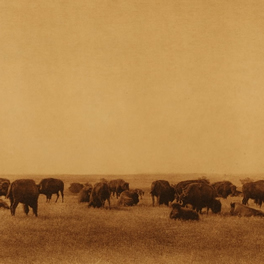
The Buffalo Plains. Cheyenee. Photo by Edward S. Curtis.

The Buffalo Plains. Photo by Edward S. Curtis.

Judy Bluehorse Skelton:
Two centuries ago, buffalo filled the Great Plains for as far as the eye could see. Lewis and Clark noted, “…this scenery, already rich, pleasing, and beautiful was still further heightened by immense herds of buffalo.” The buffalo numbered in the millions and were the main stable of the tribes of the region.

As the horse entered their culture in the 18 th century, the Gros Ventres, like other plains tribes, were dramatically affected. They became more and more dependent on the Buffalo fur sustenance, following the migrating herds across the plains rather than staying put to raise crops. A sacred gift from the Creator, this powerful animal was and is revered today. Ceremonies and other rituals would be held to prepare the hunters for a successful hunt, and to honor the animals who would provide so much. The whole village prepared for the hunters’ return, and offered thanks to the animals that had given their lives so that the people might live.

Photos below courtesy of a2zcds.
Click to enlarge.
www.a2zcds.com

Music:
Medicine Dance
Burning Sky
Spirits in the Wind
Canyon Records
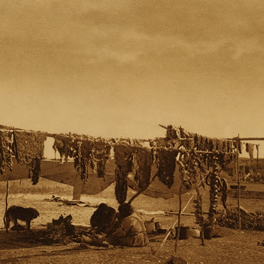
In Camp. Photo by Edward S. Curtis.

In Camp. Photo by Edward S. Curtis.

Over the next hundred years, the buffalo were brought to the edge of extinction as western expansion brought a flood of settlers onto the plains. U.S. government policy to slaughter buffalo made room for farming and cattle ranching. Eliminating the buffalo would force Indians to abandon their traditional lifestyle and assimilate into the farming culture.

It was open-season on buffalo. In a 2-year period, between 1881 to 1883, called the buffalo disaster, the northern herd of buffalo was almost exterminated as an estimated 320,000 hides were shipped out of the country. With their buffalo gone, traditional customs threatened, and government rations frequently withheld, sickness and suffering among native people in the northern Great Plains became widespread. By 1883, an estimated population of 70 million wild buffalo that once reached from Alaska to northern Mexico, was cut to just 350 animals.

Music:
Medicine Dance
Burning Sky
Spirits in the Wind
Canyon Records

Now, a hundred and twenty years later, change is in the air. From the Black Hills of the Dakotas to the tall-grasses of Oklahoma, a renewal of the buffalo, and Native people, is taking place. According to the census, the non-native population has been decreasing for several decades. At the same time, there are more native people and buffalo on the plains than at any time since the 1870’s.

The late Patricia Locke is a Lakota and Chippewa elder and a MacArthur Foundation fellow. She said, “What’s happening is really quite astonishing. It’s like an evacuation one way, and a homecoming in the other.”

After the Buffalo Chase - Sioux

George Catlin American, 1796 - 1872 After the Buffalo Chase - Sioux, 1861/1869 oil on card mounted on paperboard, 47.6 x 63.8 cm (18 3/4 x 25 1/8 in.) Paul Mellon Collection 1965.16.11

In publicly owned prairie land, native grasses and wildflowers have returned now that the land is no longer plowed for farming. Much of this land will never be plowed again thanks to a measure that designates nearly one third of the nation’s 3.7 million acres of national grassland as road-less areas.

Species like prairie dogs, burrowing owls and buffalo have made big comebacks. Buffalo have recovered to nearly 300,000 today. More than thirty tribes, including the Gros Ventre and Assiniboine, are managing large herds on land where, unlike cattle, buffalo need no help to flourish. Sixteen of the 34 accredited tribal colleges offer courses in buffalo management.

Gros Ventre tribal leader, Ben Speakthunder, says their herd benefits the tribe by providing buffalo to individual families when they are hosts for the feed at a Sundance or other large cultural event. Gros Ventre and Assiniboine tribes share a reservation in north central Montana called Fort Belknap. At the Fort Belknap Tribal College, students have an opportunity to not only learn about herd management, but to reconnect with the buffalo and the culture of their ancestors.

Music:
Medicine Dance
Burning Sky
Spirits in the Wind
Canyon Records

Prairie Dog Village

George Catlin American, 1796 - 1872 Prairie Dog Village, 1861/1869 oil on card mounted on paperboard 46.9 x 63.4 cm (18 1/2 x 25 in.) Paul Mellon Collection 1965.16.185

The return of the buffalo was foretold by native people 150 years ago. Today, the buffalo continues to inspire, nourish and serve as a central figure to the restoration and renewal of Native Americans everywhere. Osadadu.

Neskahi:
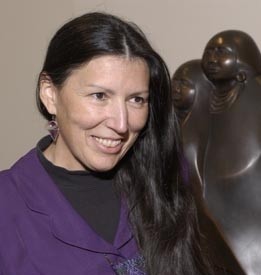
Educator, writer and herbalist Judy Bluehorse Skelton is Nez Perce, Chickasaw and Cherokee. She lives and works in Portland, Oregon.

Wisdom of the Elders 2026 Summer Newsletter A paid internship, now enrolling. Plus elders' voices, mapped to the land they came from.
Wisdom of the Elders, Inc

What We Plant, We Pass On

Wisdom of the elders Multimedia Services

Greetings, Friends of Wisdom,


The summer season has a way of moving fast, and this season has been no exception. Between fieldwork, new partnerships, and the everyday work of listening and preserving, our community showed up for each other and for the land we share.


We're grateful for every hand that helped make this season count, and we're glad to share a bit of it with you here. 


Our Wisdom of the Elders archive continues to grow, with new conversations from our tape collection making their way online – elders speaking in their own words, no interruptions, no filters. There is something about hearing a story the way it was actually told, at the pace it was actually told, that no summary has ever managed to hold.


We've also been out in the field this summer with our Indigenous Traditional Ecological Knowledge (ITEK) crew, capturing the land stewardship and ecological knowledge work that grounds so much of what we do.


Stephanie Craig


We spent time with Stephanie Craig, a 7th-generation Kalapuya weaver and an enrolled member of the Confederated Tribes of Grand Ronde, documenting her basket-weaving practice for an upcoming series, Seven Generations of Knowledge, carried in a pair of hands.


Watch The Featured Video
ITEK Partners

It Takes Many Hands

We're also proud to be part of the BRANCH Coalition, a group of organizations working together on invasive species removal, native plant restoration, watershed stewardship, and care of urban green spaces across the Portland area.


Our partners in this work include Portland Parks, Urban Forestry Project, Connecting Canopies, The Blueprint Foundation, Depave, Friends of Trees, Verde PDX, Columbia Slough, POIC, APANO, BPI PDX, and the City of Gresham. It takes many hands to care for this land well, and we're grateful to do so alongside organizations that share the same commitment.


Wisdom Digital Archive Initiative 

Multimedia: Putting 30+ years of Archival footage on the Map

Behind the scenes, we're preparing our full video library for a larger public home so more people can access this work. Our web team is also building out a major piece of our Digital Archive Initiative: an interactive online story map that will let visitors explore our archive by place, connecting oral histories, video, photographs, and traditional ecological knowledge directly to the land they come from.


The stories will no longer live in a list. They will live where they happened so that someone can open the map, find a place they know, and hear an Elder speak about it. It's one of the more ambitious projects we've taken on, and we can't wait to bring it online.


Board of Directors and our Wisdom Radio Program

We're also working closely with our Board of Directors on a full relaunch of our Radio Program, with plans to bring it to every major platform, making it easier than ever to listen wherever you are. Stay tuned; this one's been a long time coming, and we're excited to share more soon.


2026 ITEK Fall Internship

Fall 2026 Indigenous Traditional Ecological Knowledge Internship Enrollment is Now Open!


We're excited to announce that enrollment is officially open for our Fall 2026 ITEK Internship, and we can't wait to welcome our next cohort! We're accepting applications from anyone passionate about Environmental Conservation & Restoration and how Wisdom integrates Indigenous Traditional Ecological Knowledge (ITEK) into our work.


This paid 12-week program combines hands-on fieldwork with partner organizations, along with in-person and online sessions covering ITEK, STEAM-related concepts, and Native American cultural arts and plant knowledge. Interns earn $19.00 an hour. It's a hands-on, heart-forward opportunity to build real skills while deepening your connection to land and community.


Spots are limited, so don't wait! 


You can read more about the program here and apply here


Questions are always welcome. Contact 


dawn@wisdomoftheelders.org and carmelina@wisdomoftheelders.org


We can't wait to see who joins us this Fall!


ITEK VIDEO

Save the Date 

Wieden+Kennedy: Dec 5, 2026 

Seeds of Wisdom Event


There's one more thing we've been building toward, and we're glad to finally share it.


Later this year, we'll gather in person for Seeds of Wisdom, our end-of-year fundraiser, hosted at Wieden+Kennedy here in Portland. Wisdom of the Elders is creating an event centered on Indigenous storytelling, environmental stewardship, and workforce development the same three threads that run through everything you've just read. It felt right to bring them into one room.


We're looking for partners who want to support meaningful community impact while helping amplify Native voices and leadership in Portland and beyond. If that sounds like you, or like an organization you're part of, we would love to hear from you. We're building our partner roster now, which means there's still real room to help shape what this evening becomes.


***As a note for those who have supported us through Willamette Week's Give!Guide in past years, we're not part of Give!Guide this season. 


We've Joined Earth Gives


Earth Gives is a nationwide platform connecting donors with organizations advancing solutions for people and the planet.


It is a natural fit for us: our work has always lived where cultural preservation and ecological stewardship meet the archive and the watershed, the storyteller and the seed, and Earth Gives puts that work in front of people across the country who care about both. 


Our end-of-year giving runs through Seeds of Wisdom and Earth Gives and we hope you'll join us there instead.


If you've been looking for a simple way to support what you've read about here, this is it.


Want to stay closer to what we're up to day-to-day? Find us on Instagram, Facebook, and YouTube; more is coming there soon, including TikTok and Threads.


There's more coming this fall. Thank you for being part of it.


Wisdom of the Elders, Inc.

Portland, Oregon

wisdomoftheelders.org


Donate Today

Join Our Community: Follow Us!

We are growing our digital community and want to stay connected with you! Follow us for updates on our latest films, internship applications, and environmental restoration projects across the Portland Metro area.

Copyright @ 2026 Wisdom of the Elders, Inc, All rights reserved.

3917 NE Shaver st. Portland, Oregon 97212