Arlie Neskahi :
Here’s Nico Wind with tribal rhythms.
Music:
James Demars
Concerto For Native American Flute
Spirit Horses: The Music Of James Demars; Nakai
Canyon Records
Nico Wind:
” . . . My horse has a hoof like striped agate.
His fetlock is like fine eagle plume.
His legs are like quick lightening.
My horse’s body is like an eagle-feathered arrow.
My horse has a tail like a trailing black cloud.His mane is made of rainbows.
My horse’s ears are made of round corn.
My horse’s eyes are made of stars.
My horse’s head is made of mixed waters.My horse’s teeth are made of white shell.
The long rainbow is in his mouth for a bridle.
With it I guide him.I am wealthy from my horse.
Before me peaceful
Behind me peaceful
Under me peaceful
Around me peaceful
Peaceful voice when he neighs
I am everlasting and peaceful.
I stand for my horse.
The words from the Navaho “war god’s horse song” express the respect, trust, and deep connection that binds the native people of North America to their beloved horse.
Music:
Brule
Spirit Horses
We The People
Natural Visions
 The horse, a welcome partner to the dog as a carrier of burdens, was called Elk Dog by the Blackfeet, Big Dog by the Nez Perce, and Sunka Wakan or Holy Dog by the Lakota. Stories and songs explain the arrival of the horse in some native cultures as a gift from the Great Spirit.
The Yuchi tribe, of the Muskogee Creek nation, have a dance that honors the horse. The dance, and its chant, assure the horse that it is of great value for it provides the gift of carrying the people long distances.
Music:
“Horse Dance” #9, Myth, Music And Dance Of The American Indian, Yuchi
De Cesare. Ruth, Ph.D. Myth, Music And Of The American Indian: An Activity Oriented Sourcebook Of American Indian Tradition, Based Upon The Music And Culture Of 21 Tribes. Teacher’s Resource Book. Van Nuys, California: Alfred Publishing Co., Inc. 1988. (Mcmlxxxviii) With Tape
Dancers imitate the movement of a horse as they trot with their right foot down flat, followed by a quick toe motion of the left foot behind it. The right foot is always on the beat. Dancers follow the leader, who plays a rattle.
A lone Navajo horseman traveling at night may use a song of tribute to his horse to create an invisible barrier of protection, a “cover” that makes it impossible for any negative spirits to penetrate the rider’s safe zone.
Music:
Ed Lee Natay
Eno Le-Yeye
Riding In The Morning, #10 (Sway Songs), Natay: Navaho Singer: Music Of Ed Lee Natay, Vintage Collection, Vol. 1
Canyon Records
Ed Lee Natay’s title for this song, “Riding In The Morning” suggests the horseman’s return home from a ceremony. The steady rhythm of the sway song is a favorite accompaniment to horseback riding.
The Taos pueblo horsetail dance may originally have been ceremonial, but since ceremonies were outlawed for over a century, the dance is today presented for the entertainment of villagers, or as a hospitality gesture to visitors. It derives its name from the horsetails that the dancers wear tied to their waists. The dancers prance and kick while showing off their tails. Because there aren’t any set steps or gestures, the dancers are able to improvise movements to the great amusement of those who watch.
Music:
Taos Pueblo Horse Tail Dance
Traditional Voices: Historic Recordings Of Traditional Native American Music
Canyon Records
Horse songs and dances are not all for simply honoring the horse. Many songs are concerned with the stealing or capturing of this amazing animal. In the past, the motivation to acquire horses was great, for horses provided increased efficiency in the hunt and greater mobility. Horses were the preferred standard of value in many native cultures.
Stealing horses as a means of acquiring wealth was thus a serious, sometimes deadly, but very exciting game that demonstrated the warrior’s skill, bravery, and cunning.
Music:
Judy Trejo
PAIUTE HORSE STEALING SONG
CIRCLE DANCE
Canyon Records
Maybe that’s why, today, horse-stealing songs are sometimes considered warrior songs, like this Paiute horse stealing the song from Ed Williams as sung by Judy Trejo. It’s about Paiute warriors going to Arizona to steal horses from a tribe there and having to escape through rows of tall corn.
Sometimes the relationship between horse and rider is not an easy one. When a rider wants to use grazing horses, he or she has to hunt them up and drive them home.
A hand-game song referring to the search for the markers hidden in the hands of the players makes an analogy to finding and catching one’s horse: “now I go to seek my horse. So here I stand and look about me. So here I stand and look about me. Now I go to seek my horse.”
Music:
Navajo Skip Dance Song
Native American Traditions
Smithsonian Folkways Recordings
A Navajo skip dance song, sung by the turtle mountain singers, laments, “it’s your fault that you’re looking for your horses all night. How could you, how could you? It’s your fault, now you’ve got to look for your horses all night long.”
On the other hand, there is the song of the horse, speaking to its rider:
“Black hair rope is what you used in roping me.
You treated me badly.
You even threw me down and tied me.
Not satisfied with that, you tied a knot in my tail. That made me disgusted.”
Johano-Ai begins each day from his Hogan in the east. Carrying the golden disk, the sun, he rides across the skies to his Hogan in the west.
Music:
Burning Sky
Wind
Creation
Canyon Records
He has five horses: a horse of turquoise, one of white shell, and one of pearl shell. These he rides when the skies are blue. He has a red shell horse and a horse of coal; he mounts them when the skies are dark and stormy.
The horses race on decorated hides and blankets, pasture on flower blossoms and drink many kinds of waters. When a horse rolls or shakes himself, he raises glittering grains of sacred pollen, like that used in Navajo ceremonies.
The Navajo sings of the horses of Johano-ai so that some day he might have horses like those of the sun god. He sings this song for the blessing and protection of his animals.
The horse is intricately woven into the mystical or religious fabric of many tribes. Membership in the Sioux horse owner’s society was offered to those who had dreamed “horse medicine” dreams granting them special powers.
Lone man, a Sioux storyteller and drummer for sun dances, expressed the mystery and beauty of the horse in a dream song, called the horsemen in the cloud. “Horsemen are coming from north and the west. They fly through the air and into the clouds, with galloping hoofs and thundering sounds. They came to me; they came to me.”
Black Elk, an Oglala Sioux prophet and healer, or holy man, had a vision of the horse nation when he was very young. This song describes the great beauty of the horse and offers a sense of hope and strength to its singers.
Music:
James Demars
Concerto For Native American Flute
Spirit Horses: The Music Of James Demars; Nakai
Canyon Records“My horses, prancing they are coming.
My horses, neighing they are coming.
Prancing they are coming.
All over the universe they come.A horse nation, they will dance. May you behold them.
A horse nation, they will dance. May you behold
Them.
A horse nation, they will dance. May you behold
Them.
A horse nation, they will dance. May you behold them.”
Host:
Tribal rhythms is produced by our music director, Nico Wind and written by Anne Morin.
If you’d like to learn more about any of the artists or music featured in our programs, visit us on the web at wisdomoftheelders.org.
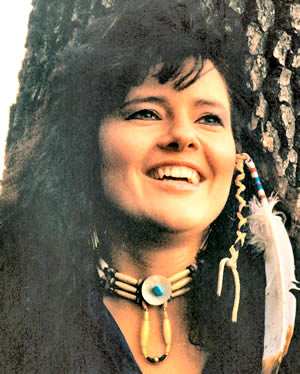
Song carrier, Nico Wind Cordova, is Assiniboine/Ojibwa. The Assiniboine people were known as “the people who cook with stones.” They were woodland peoples, a nomadic Nakota tribe that traveled with their dogs and horses throughout the northern plains and up into Canada. The Ojibwa were located in eastern Canada and the Great Lakes region.
There is a lot of French influence in both tribes of Nico’s lineage. Both tribes migrated with the animals for the seasonal changes and had a very close relationship with the natural world.
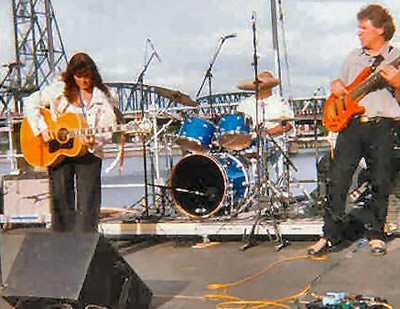
Nico was raised by her mother and aunt in Portland, Oregon. Her mother, the English teacher, Anne Morin, took a teaching job and moved to Hays, Montana to help Nico realize the missing part of her heritage. After finishing high school on the Fort Belknap Reservation in Hays, Montana, Nico hit the road as a full blood musician. She has been a traveling professional musician and bandleader for over 30 years. Her experiences took her and her bands of up to 13 members, throughout the United States and abroad. Later on in life, Nico learned more about her Sioux culture after she was ‘adopted’ by Charles Fast Horse of South Dakota. Charles took her to the graves of the people who died defending their people. It was at Wounded Knee and Bear Butte that she found her connection to who and where she came from.
Some of the many facets of Nico are: performing, writing songs and music directing for radio, TV, videos, and famous clubs, opening for legendary people and groups, bandleader, lead singer, backup singer, guitarist & songwriter. She also started her own record label – “Arrow Records & Tapes.” She has received many various awards, produced and marketed recordings for a Native American flute player, performed at benefits for Native art contributions, writes monthly articles for an entertainment and dining guide, produced her own CD, called “A Feather to Fly By,” and owns and operates one of the only karaoke retail stores in Oregon. It must be said that Nico has always been very connected with the animals and all living things throughout her life. It is a huge part of who she is as a person.
Nico’s performances and presentations include all age groups and types of audiences. She has stories to share of her experiences when she lived off and on the reservation. She feels honored to be called a song carrier. She is still learning the songs of her relatives. Her sources of songs come from the reservation, dreams, memories, friends from different tribes, old tapes of family elders, and the animals.
Nico has a beautiful memory about when she was living on the reservation, some of the other kids were giving her a hard time about being a ‘breed’ (half breed) and she cried to her grandmother about how the insults were hurting her. Her grandmother asked, “Which half is Indian and which half is not?” Nico replied that she was all mixed up together. Her grandmother said, “You’re not a ‘breed’, then, you’re all mixed up!” Nico laughed. The grandma then got really serious and said, “You are a horizon child.” Part of you lives in the great grandfather sky and part of you lives where the sky touches the earth. And because of that, ‘my girl,’ you will never be anyone thing that is not beautiful.” The grandma embraced her for a long moment with her wonderful unconditional love. Nico will never forget her words.
Nico always tries to honor the spirituality of her culture with her music. She believes in giving something back to the universe for the blessings and wisdom she has received as a human being. As an artist, song carrier, and animal advocate, Nico feels that our existence depends on what beauty we share and leave behind when our time here has come full circle. Nico Wind Cordova lives on the horizon and sings to the moon and stars.
Nico Wind Cordova
(503) 655-1616 shop
nicowind@comcast.net