Corwin Clairmont

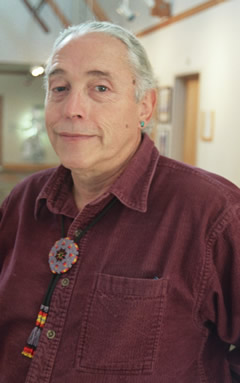
Corwin Clairmont. Photo by Larry Johnson.

Artist’s Circle: Corwin Clairmont

with Bruce Crespin

[audio:https://www.wisdomoftheelders.org/prog302/mp3/302_ac.mp3]

Arlie Neskahi:
The hearts and minds of native people and their ancestors are expressed in their art, be it beaded buckskin, cedar baskets or ceramic bowls. Contemporary tribal artists can draw from a greater variety of media than their ancestral peers. They may paint on canvas or work with photographs, metals, or natural materials, often connecting with tribal realities in subtle or ironic ways. In today’s Artist’s Circle, Bruce Crespin explores the work of Salish-Kootenai conceptual artist “Corky” Clairmont.

Corky Clairmont:
I’m not so much interested that they always agree with me in what they’re seeing. I don’t put work out that gives solutions but provokes questions.

Bruce Crespin:
Corwin Clairmont sits in his cluttered office at Salish-Kootenai College on the Flathead Indian Reservation. He opens an exhibit catalogue to a print displaying a portion of the Lewis and Clark trail. Multi-hued Indian moccasin foot prints cross the trail in all directions, while a few black boot prints heading one way are superimposed atop everything else. From 1991, this print series, “10,000 Years Indigenous People, 200 Years Lewis and Clark” looks at the “voyage of discovery” with an Indian “spin”.

Corky Clairmont:
The moccasin prints, if you look at that as kind of a metaphor to hard-soled shoes, you get a kind of a glimpse of the difference between the newcomers and the native communities. When you are wearing a pair of moccasins made out of soft deerskin, and you step on the earth, you feel the temperature of the earth. You feel the dampness. You feel the texture, the little stones. When you put on a hard pair of shoes and you step into the same places, you feel nothing.

Bruce Crespin:
Corwin, also known as Corky, was born at St. Ignatius, Montana. He started showing artistic promise early. At fifteen, he designed the official tribal seal, which is still used today. He completed studies at Montana State University, and earned a masters degree from California State University in Los Angeles. Staying in L.A. through the 70’s, he taught fine arts and directed programs at the Otis Art Institute. In much of his early work, he was already mixing media, as he examined and questioned U.S. culture with humor and irony.

Corky Clairmont:
I gravitated towards artists that were more issue oriented, that were doing art that said something about what was going on. I kind of liked that aspect. It seemed to be more participatory in life, and reflective of life.

Bruce Crespin:
Corky returned home to the Flathead Reservation in 1984 and began teaching at the tribal college. He continues to combine seemingly unrelated elements in his innovative art to better express a tribal point of view.

Corky Clairmont:
It’s work that I feel is educational and is not just for the native community, but is for everyone that might want to get a better understanding of our Indian people.

Bruce Crespin:
Clairmont’s 1993 mixed-media work, “Asphalt Storm Clouds Over the Reservation” is an example. In it, he comments on the proposed expansion of a highway that runs through the middle of the Flathead reservation. The piece is formed by four lodge poles, tied at the top to form a tipi frame. Inside the structure, book-sized chunks of broken black asphalt dangle over a platform. On the platform are aerial photos of the reservation along with landscape photos taken on the ground.

Corky Clairmont:
When you flood the piece with light, it casts shadows on top of the photographs, or what I refer to as “storm cloud images” on the photographs. And so, it’s an attempt to describe the asphalting of our lands.
Passage by Corwin Clairmint.

Passage by Corwin Clairmint.

Bruce Crespin:
Corky worked with other tribal activists to educate highway planners and make them more accountable for the natural elements of the landscape.

Corky Clairmont:
We were able to secure overpasses over waterways or pond areas that allowed the turtles and the smaller animals to easily get from one pond to the other without crossing the highway.

Bruce Crespin:
Corky’s 1993 painting “Paha Sapa ” simultaneously shows us the native and non-native views of Mt. Rushmore in the Sacred Black Hills of South Dakota. A non-Indian tourist family wears mirrored sunglasses that reflect images of the four presidents on Mt. Rushmore; at the same time, an Indian family’s sunglasses reflect four skulls.

In preparation for “ Time X for Northwest Indigenous Indian Peoples,” Corky himself followed the Lewis and Clark trail, from Bismark, North Dakota to Portland, Oregon. Corky subtitled this 2003 work, “ Indian discovers Lewis and Clark Artifacts. ” The piece looks like a Timex watch display case, filled with trinkets and commercial memorabilia from gift shops and visitors centers along the trail. Little tags identify each one, as in a museum.

Corky Clairmont:
And I really encourage everybody to be an artist. Each one of us has something that we can communicate through the arts. You can many times get your point across in kind of a non-threatening manner. So I feel everybody needs to be doing art. (chuckles)

Bruce Crespin:
For Wisdom of the Elders, I’m Bruce Crespin.

Wisdom of the Elders 2026 Summer Newsletter A paid internship, now enrolling. Plus elders' voices, mapped to the land they came from.
Wisdom of the Elders, Inc

What We Plant, We Pass On

Wisdom of the elders Multimedia Services

Greetings, Friends of Wisdom,


The summer season has a way of moving fast, and this season has been no exception. Between fieldwork, new partnerships, and the everyday work of listening and preserving, our community showed up for each other and for the land we share.


We're grateful for every hand that helped make this season count, and we're glad to share a bit of it with you here. 


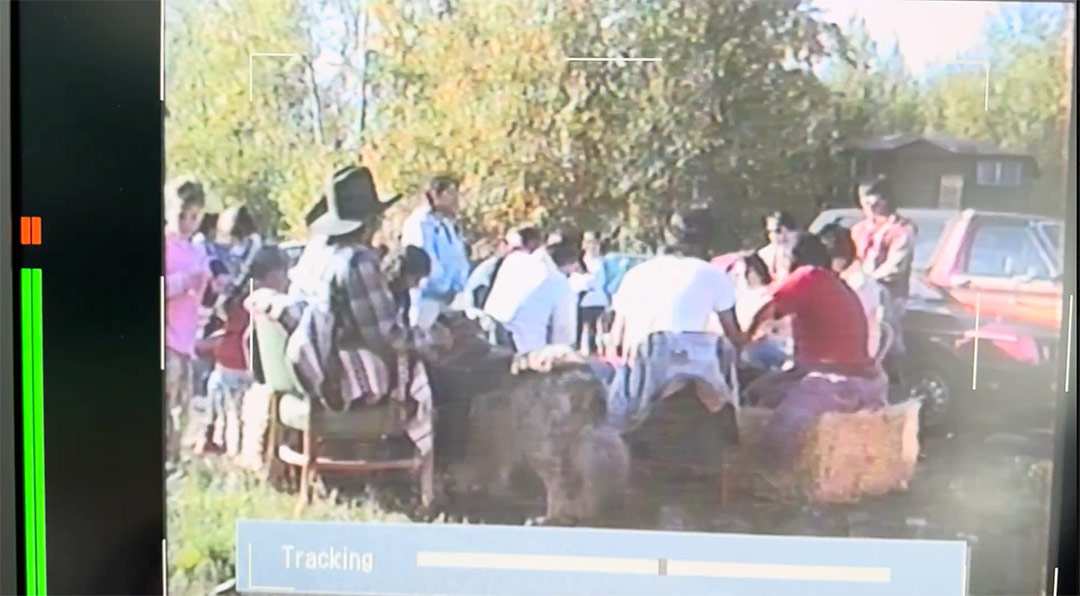
Our Wisdom of the Elders archive continues to grow, with new conversations from our tape collection making their way online – elders speaking in their own words, no interruptions, no filters. There is something about hearing a story the way it was actually told, at the pace it was actually told, that no summary has ever managed to hold.


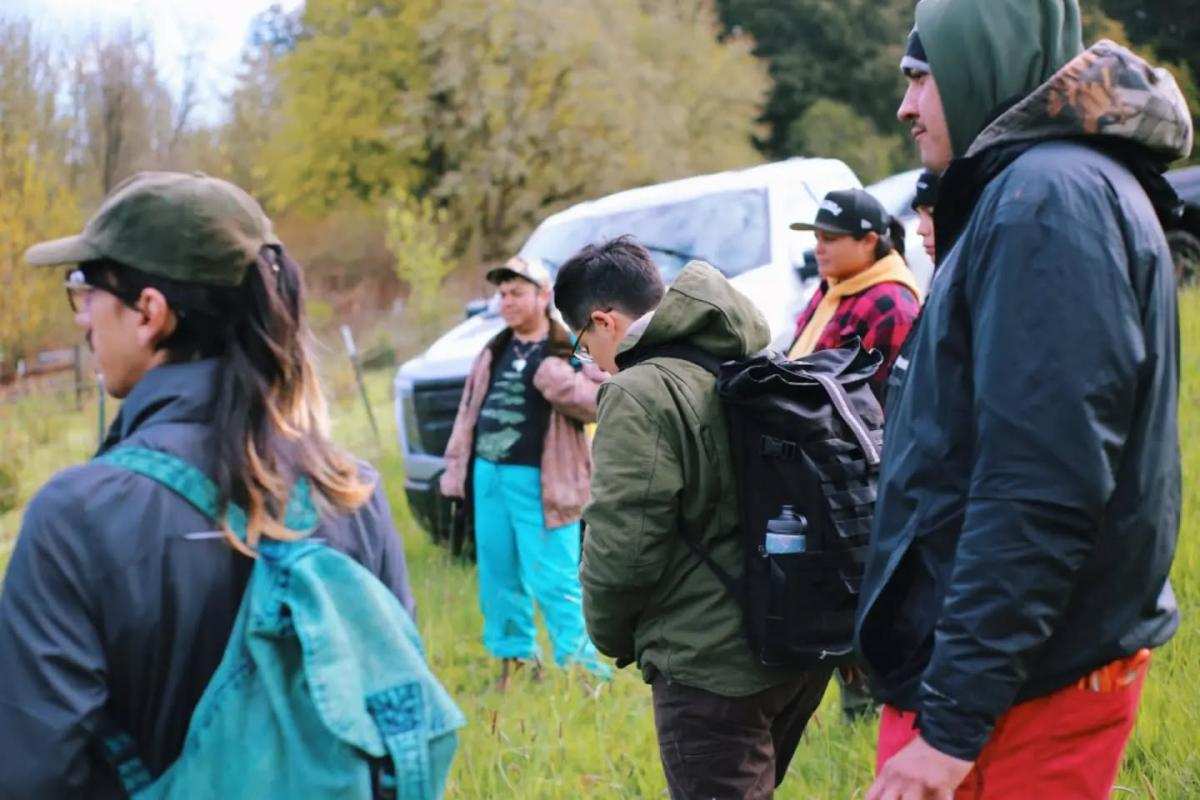
We've also been out in the field this summer with our Indigenous Traditional Ecological Knowledge (ITEK) crew, capturing the land stewardship and ecological knowledge work that grounds so much of what we do.


Stephanie Craig


We spent time with Stephanie Craig, a 7th-generation Kalapuya weaver and an enrolled member of the Confederated Tribes of Grand Ronde, documenting her basket-weaving practice for an upcoming series, Seven Generations of Knowledge, carried in a pair of hands.


Watch The Featured Video
ITEK Partners

It Takes Many Hands

We're also proud to be part of the BRANCH Coalition, a group of organizations working together on invasive species removal, native plant restoration, watershed stewardship, and care of urban green spaces across the Portland area.


Our partners in this work include Portland Parks, Urban Forestry Project, Connecting Canopies, The Blueprint Foundation, Depave, Friends of Trees, Verde PDX, Columbia Slough, POIC, APANO, BPI PDX, and the City of Gresham. It takes many hands to care for this land well, and we're grateful to do so alongside organizations that share the same commitment.


Wisdom Digital Archive Initiative 

Multimedia: Putting 30+ years of Archival footage on the Map

Behind the scenes, we're preparing our full video library for a larger public home so more people can access this work. Our web team is also building out a major piece of our Digital Archive Initiative: an interactive online story map that will let visitors explore our archive by place, connecting oral histories, video, photographs, and traditional ecological knowledge directly to the land they come from.


The stories will no longer live in a list. They will live where they happened so that someone can open the map, find a place they know, and hear an Elder speak about it. It's one of the more ambitious projects we've taken on, and we can't wait to bring it online.


Board of Directors and our Wisdom Radio Program

We're also working closely with our Board of Directors on a full relaunch of our Radio Program, with plans to bring it to every major platform, making it easier than ever to listen wherever you are. Stay tuned; this one's been a long time coming, and we're excited to share more soon.


2026 ITEK Fall Internship

Fall 2026 Indigenous Traditional Ecological Knowledge Internship Enrollment is Now Open!


We're excited to announce that enrollment is officially open for our Fall 2026 ITEK Internship, and we can't wait to welcome our next cohort! We're accepting applications from anyone passionate about Environmental Conservation & Restoration and how Wisdom integrates Indigenous Traditional Ecological Knowledge (ITEK) into our work.


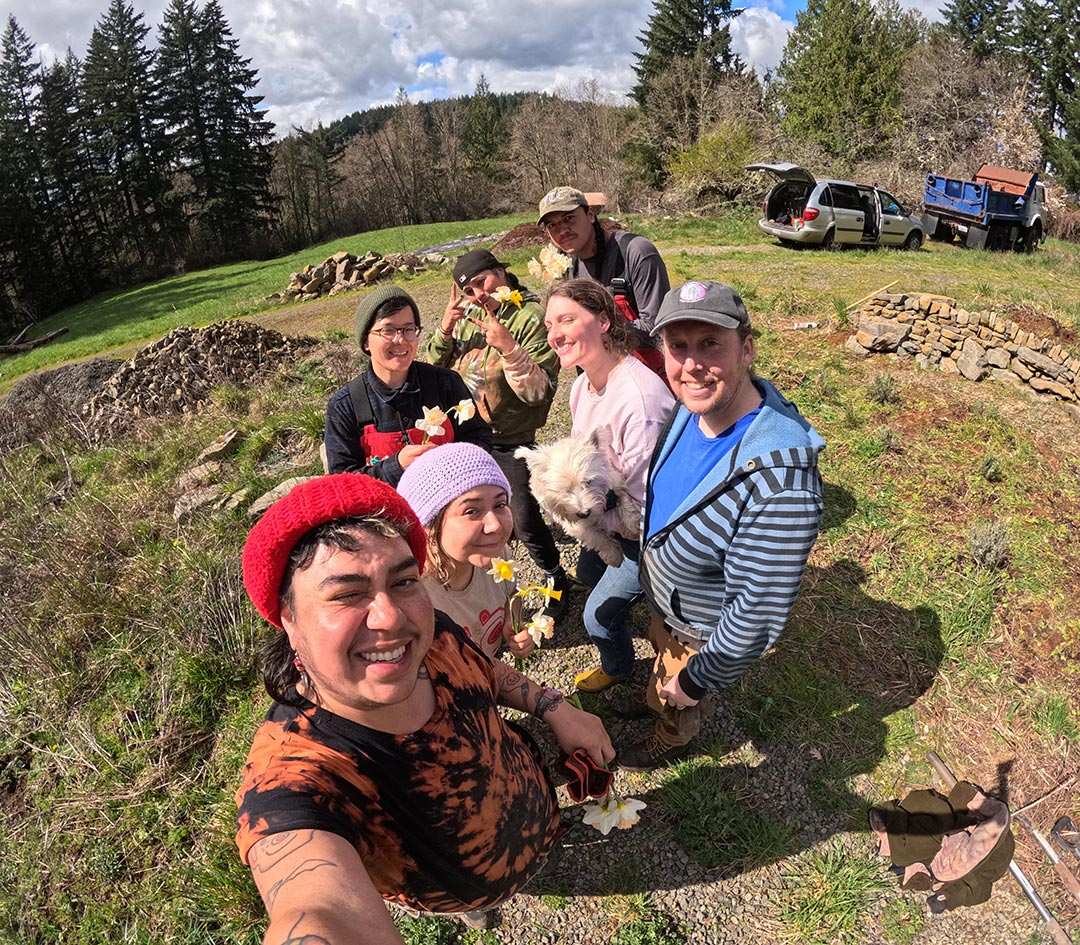
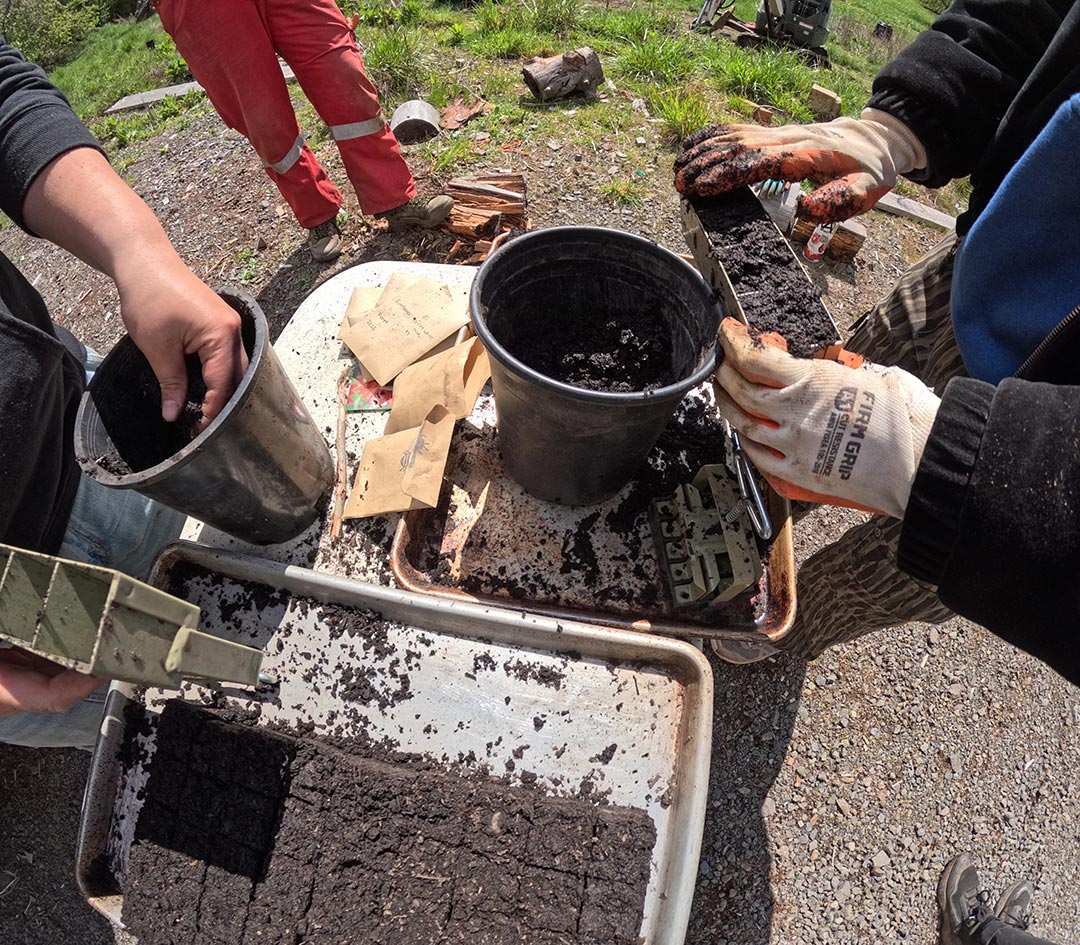
This paid 12-week program combines hands-on fieldwork with partner organizations, along with in-person and online sessions covering ITEK, STEAM-related concepts, and Native American cultural arts and plant knowledge. Interns earn $19.00 an hour. It's a hands-on, heart-forward opportunity to build real skills while deepening your connection to land and community.


Spots are limited, so don't wait! 


You can read more about the program here and apply here


Questions are always welcome. Contact 


dawn@wisdomoftheelders.org and carmelina@wisdomoftheelders.org


We can't wait to see who joins us this Fall!


ITEK VIDEO

Save the Date 

Wieden+Kennedy: Dec 5, 2026 

Seeds of Wisdom Event


There's one more thing we've been building toward, and we're glad to finally share it.


Later this year, we'll gather in person for Seeds of Wisdom, our end-of-year fundraiser, hosted at Wieden+Kennedy here in Portland. Wisdom of the Elders is creating an event centered on Indigenous storytelling, environmental stewardship, and workforce development the same three threads that run through everything you've just read. It felt right to bring them into one room.


We're looking for partners who want to support meaningful community impact while helping amplify Native voices and leadership in Portland and beyond. If that sounds like you, or like an organization you're part of, we would love to hear from you. We're building our partner roster now, which means there's still real room to help shape what this evening becomes.


***As a note for those who have supported us through Willamette Week's Give!Guide in past years, we're not part of Give!Guide this season. 


We've Joined Earth Gives


Earth Gives is a nationwide platform connecting donors with organizations advancing solutions for people and the planet.


It is a natural fit for us: our work has always lived where cultural preservation and ecological stewardship meet the archive and the watershed, the storyteller and the seed, and Earth Gives puts that work in front of people across the country who care about both. 


Our end-of-year giving runs through Seeds of Wisdom and Earth Gives and we hope you'll join us there instead.


If you've been looking for a simple way to support what you've read about here, this is it.


Want to stay closer to what we're up to day-to-day? Find us on Instagram, Facebook, and YouTube; more is coming there soon, including TikTok and Threads.


There's more coming this fall. Thank you for being part of it.


Wisdom of the Elders, Inc.

Portland, Oregon

wisdomoftheelders.org


Donate Today

Join Our Community: Follow Us!

We are growing our digital community and want to stay connected with you! Follow us for updates on our latest films, internship applications, and environmental restoration projects across the Portland Metro area.

Copyright @ 2026 Wisdom of the Elders, Inc, All rights reserved.

3917 NE Shaver st. Portland, Oregon 97212