We Are in a Heritage Generation

Diane Mallickan
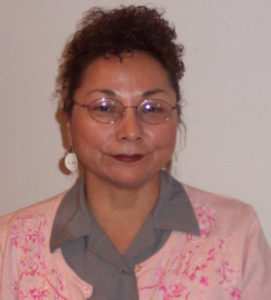
Diane MallickanMy grandparents are Shoshone Paiute. So I have a lot of family down in California and Nevada, and my mother was Nez Perce. So we were raised actually in both places. We lived in the Lochsa area up here. That’s all National Forest in there. We spent our winters up here and our summers down in northern California.

A lot of the influence in my life came from my Shoshone grandfather and I know that the way they deal with things is very different than in the Nez Perce. Their history down there with interaction with White people was very different than ours. Although a lot of the American focus has been on the Nez Perce because of Lewis and Clark.

When we look at Nez Perce history, we had dealt with early explorers like Lewis and Clark and course they were commissioned by the president and they were on a military expedition actually. We dealt with missionaries and some of the early settlers who were all family men, all family people. It wasn’t until 1860 that we actually dealt with a class of people we had not dealt with before, and that was the gold miners

But as far as resources go, natural resources in particular, it’s really interesting because people can say, “Well, Lewis and Clark came here two hundred years ago and that’s past and done.” But the very impact of their coming is the reason today that we have to fight so hard to bring the salmon back and bring the wolf back and hopefully the grizzly bear.

They’re certainly symbolic of the end of our lifestyle as it once was. But in spite of the grief and the sorrow that we have from our wars that ended our life and so forth we continue today. We have our families. We raise them and we want the best for them. We want them to be happy.

This is how I was raised and it’s how I tell my grandchildren. I tell them the truth. I don’t want them to grow up and study so-called Indian history in school and hear a whole different version. I want them to know and then when they go to school they can measure against that. In the 1950s it was very different. I’d come home from school and I’d say, “You know, either all my teachers are liars or my grandfather’s a liar,” because there was no connecting. I do think today that the American public and the teachers in particular are working harder than they ever have.

We still have a ways to go and every generation has to be educated. You can say, “Well, we got that job done,” but no, you get a whole new crop of people and we have to go through the learning process again. It’s kind of funny. I think back of the decades in this country. I came in on the tail end of the time when it was really bad to be Indian. It was not only reproachful, but it was almost scary and so I felt hints of that during my childhood.

Today is very different. It’s the Historical institutions in the country or things like the Bicentennial that want the Indian story. We know that just as those times are here today, we know that that pendulum can swing. Statistics show that we are in a heritage generation. I think, “Well, if this is the heritage generation, what are we going to do when it’s not the heritage generation?” Will that pendulum swing way over again? So if it does, it doesn’t change who we are. We’re still Indian people. We’re still Nimiipuu.

Regardless of our history and regardless of the challenges we have in today’s world, there’s no way that I could possibly think that I’d want to be anybody else. The Creator has made everyone so unique and who we are that no matter what the circumstances, there’s no way I would want to be non-Indian. I think that’s really the story. It’s the story of survival. It is a proud history in spite of everything.


Diane Mallickan

Diane Mallickan is Nez Perce or “Nimiipu, meaning “real people” or “we the people.” Her dad, Glen Wasson, is Piaute and Shoshone and her mother is Nez Perce. Her grandparents on her fathers’s side were Tom and Sadie Wasson. Tom was a descendant of the Piaute Chief Winnemucca. Her mother’s parents were Bill and Nancy Corbett. The Corbett family is buried on the old buffalo trail that’s now a part of the highway between Idaho and Montana. The grandparents were very traditional. The women became good gardeners and raised fruit along the Salmon and Snake Rivers. They were the horticulturalists. The tribe is located in north central Idaho, southeast Washington and northeast Oregon, which is the aboriginal area.

Diane is a park ranger/cultural interpreter at the Nez Perce National Historic Park and discusses history with the public on a daily basis. Working at the NPS she has learned about collection gourds, tipis and how family’s burnt many possessions when converting to Christianity. She has received National Park Service awards, served on the Nez Perce County Historical Society, and is part of a team producing three to four volumes of unpublished Nez Perce history. Diane’s presentations review the seven-drum song, sweathouses and the sweat bath, stories of health and healing, and special stories for children. Diane speaks mainly at the NHP, but she has spoken to college classes and was on the speaker’s bureau for the Lewis and Clark Commemorations of Idaho.

A grandmother, Diane is a spokesperson for the environment and our natural resources, especially when it comes to saving the salmon. She appreciates her spiritual side, and is very connected to the outdoors. She will be included in the Historical Intro feature for Wisdom of the Elders Radio: Series Three.

Diane Mallickan
27984 Goldner Road
Lapwi, Id 83540
208 843-2261×122 wk
208-843-2281
diana_mallickan@nps.gov

Wisdom of the Elders 2026 Summer Newsletter A paid internship, now enrolling. Plus elders' voices, mapped to the land they came from.
Wisdom of the Elders, Inc

What We Plant, We Pass On

Wisdom of the elders Multimedia Services

Greetings, Friends of Wisdom,


The summer season has a way of moving fast, and this season has been no exception. Between fieldwork, new partnerships, and the everyday work of listening and preserving, our community showed up for each other and for the land we share.


We're grateful for every hand that helped make this season count, and we're glad to share a bit of it with you here. 


Our Wisdom of the Elders archive continues to grow, with new conversations from our tape collection making their way online – elders speaking in their own words, no interruptions, no filters. There is something about hearing a story the way it was actually told, at the pace it was actually told, that no summary has ever managed to hold.


We've also been out in the field this summer with our Indigenous Traditional Ecological Knowledge (ITEK) crew, capturing the land stewardship and ecological knowledge work that grounds so much of what we do.


Stephanie Craig


We spent time with Stephanie Craig, a 7th-generation Kalapuya weaver and an enrolled member of the Confederated Tribes of Grand Ronde, documenting her basket-weaving practice for an upcoming series, Seven Generations of Knowledge, carried in a pair of hands.


Watch The Featured Video
ITEK Partners

It Takes Many Hands

We're also proud to be part of the BRANCH Coalition, a group of organizations working together on invasive species removal, native plant restoration, watershed stewardship, and care of urban green spaces across the Portland area.


Our partners in this work include Portland Parks, Urban Forestry Project, Connecting Canopies, The Blueprint Foundation, Depave, Friends of Trees, Verde PDX, Columbia Slough, POIC, APANO, BPI PDX, and the City of Gresham. It takes many hands to care for this land well, and we're grateful to do so alongside organizations that share the same commitment.


Wisdom Digital Archive Initiative 

Multimedia: Putting 30+ years of Archival footage on the Map

Behind the scenes, we're preparing our full video library for a larger public home so more people can access this work. Our web team is also building out a major piece of our Digital Archive Initiative: an interactive online story map that will let visitors explore our archive by place, connecting oral histories, video, photographs, and traditional ecological knowledge directly to the land they come from.


The stories will no longer live in a list. They will live where they happened so that someone can open the map, find a place they know, and hear an Elder speak about it. It's one of the more ambitious projects we've taken on, and we can't wait to bring it online.


Board of Directors and our Wisdom Radio Program

We're also working closely with our Board of Directors on a full relaunch of our Radio Program, with plans to bring it to every major platform, making it easier than ever to listen wherever you are. Stay tuned; this one's been a long time coming, and we're excited to share more soon.


2026 ITEK Fall Internship

Fall 2026 Indigenous Traditional Ecological Knowledge Internship Enrollment is Now Open!


We're excited to announce that enrollment is officially open for our Fall 2026 ITEK Internship, and we can't wait to welcome our next cohort! We're accepting applications from anyone passionate about Environmental Conservation & Restoration and how Wisdom integrates Indigenous Traditional Ecological Knowledge (ITEK) into our work.


This paid 12-week program combines hands-on fieldwork with partner organizations, along with in-person and online sessions covering ITEK, STEAM-related concepts, and Native American cultural arts and plant knowledge. Interns earn $19.00 an hour. It's a hands-on, heart-forward opportunity to build real skills while deepening your connection to land and community.


Spots are limited, so don't wait! 


You can read more about the program here and apply here


Questions are always welcome. Contact 


dawn@wisdomoftheelders.org and carmelina@wisdomoftheelders.org


We can't wait to see who joins us this Fall!


ITEK VIDEO

Save the Date 

Wieden+Kennedy: Dec 5, 2026 

Seeds of Wisdom Event


There's one more thing we've been building toward, and we're glad to finally share it.


Later this year, we'll gather in person for Seeds of Wisdom, our end-of-year fundraiser, hosted at Wieden+Kennedy here in Portland. Wisdom of the Elders is creating an event centered on Indigenous storytelling, environmental stewardship, and workforce development the same three threads that run through everything you've just read. It felt right to bring them into one room.


We're looking for partners who want to support meaningful community impact while helping amplify Native voices and leadership in Portland and beyond. If that sounds like you, or like an organization you're part of, we would love to hear from you. We're building our partner roster now, which means there's still real room to help shape what this evening becomes.


***As a note for those who have supported us through Willamette Week's Give!Guide in past years, we're not part of Give!Guide this season. 


We've Joined Earth Gives


Earth Gives is a nationwide platform connecting donors with organizations advancing solutions for people and the planet.


It is a natural fit for us: our work has always lived where cultural preservation and ecological stewardship meet the archive and the watershed, the storyteller and the seed, and Earth Gives puts that work in front of people across the country who care about both. 


Our end-of-year giving runs through Seeds of Wisdom and Earth Gives and we hope you'll join us there instead.


If you've been looking for a simple way to support what you've read about here, this is it.


Want to stay closer to what we're up to day-to-day? Find us on Instagram, Facebook, and YouTube; more is coming there soon, including TikTok and Threads.


There's more coming this fall. Thank you for being part of it.


Wisdom of the Elders, Inc.

Portland, Oregon

wisdomoftheelders.org


Donate Today

Join Our Community: Follow Us!

We are growing our digital community and want to stay connected with you! Follow us for updates on our latest films, internship applications, and environmental restoration projects across the Portland Metro area.

Copyright @ 2026 Wisdom of the Elders, Inc, All rights reserved.

3917 NE Shaver st. Portland, Oregon 97212