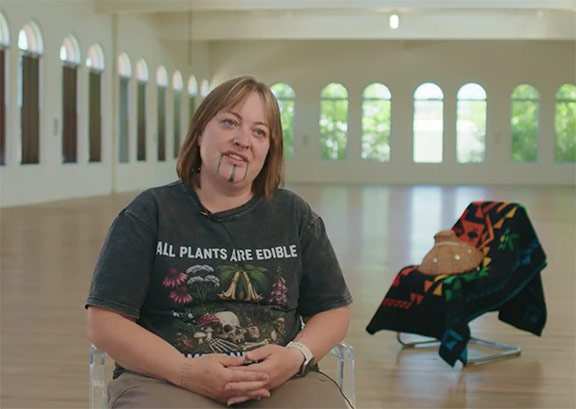
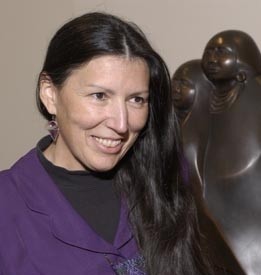
Judy Bluehorse Skelton

Judy Bluehorse Skelton

with Judy Bluehorse Skelton
[audio:https://www.wisdomoftheelders.org/s2_progs/201_sl.mp3]

Arle Neskahi:
Many native songs and ceremonies are sacred. Many of them were given as gifts from the spirit powers, from the mountains, the rivers, what Lewis and Clark may have seen as empty wilderness.

In Sacred Landscapes, Judy Bluehorse Skelton explores native perspectives on the land and water, plants and animals that Lewis & Clark encountered along their journey.

Judy Bluehorse Skelton:
When Lewis and Clark set out in search of the fabled Northwest Passage, the United States was not yet thirty years old. Their travels west, into what Thomas Jefferson called the “wilderness,” would take them through rivers, prairies, mountains and meadows and finally to the great water, the Pacific Ocean.

The people they met, representing over fifty different Native American tribes, had called this land home for thousands of years. They knew the plants, animals, rivers and mountains intimately. Tribal stories and oral histories told of their significance to the people and the roles they played in creating a good life. Customs and ceremonies honored the abundant gifts of the plants and animals, as well as the mountains, waterfalls, lakes and springs. All were revered for their sacredness.

These beliefs and practices reflected the respectful understanding of what was needed to maintain balanced relations between humans and nature. The natural world was not a separate world from humans. Tribal languages had no word for “wilderness.” A unifying theme for these diverse native communities was the importance of balancing and respecting “nature,” the natural world, all of creation. It’s what kept this land so pristine and healthy for thousands of years prior to European contact. Good relationships had sustained the people, native people, since the beginning of time.

Water, water is a recurring feature in the Lewis & Clark story. For Native people water is sacred, not only because we need it to live, but because of its healing power, its capacity to purify and cleanse. Your first “herb,” your very first medicine, is water. It purifies on the emotional and spiritual level as well as the physical. It clears toxins and refreshes the spirit. In many tribal traditions we “go to water” for many blessing ceremonies, go to water for new baby, go to water for coming of age, initiation to womanhood or manhood, go to water for an anniversary, after a loss, for forgiveness, and ultimately for transformation.

In most cultures of the world, when we go back far enough in time, we find the people and their communities acknowledged similar relationships with the sacredness of water. This is still carried on today with many religious and spiritual practices around the world.

Water, water is sacred. I remember visiting a Catholic church for the first time and noticing the small basin of water in the entryway. holy water. This is sacred to them. I thought, it must have been very conflicting for native peoples as the Europeans arrived, to observe how they built their towns on the waterways and dumped their waste into the rivers. But the water they reserved in the little basin in the church was still sacred. It appeared their daily activities and business practices didn’t recognize water’s sacredness outside the church.

I was invited to speak at a high school science class. They were studying ethno botany and the teacher wanted me to share plant medicine. provide a Native American perspective. As I walked into the classroom, I noticed two different mobiles hanging from the ceiling. One said “animate” the other “inanimate.” The animate mobile had picture cut out from magazines of puppies, children, an elderly couple holding hands. Interestingly, the inanimate mobile had pictures of a waterfall, Mount Hood, cedar trees, a meadow, and large rocks. I thought, in western culture, the human and his domesticated animals are animate, alive. The rest is inanimate, without feeling, power or spirit. In native culture, it is the waterfalls, rivers, trees, mountains, rocks that are most sacred, most revered. Living long lives and repositories of great wisdom, they have the most to teach us.

And so that inspired my talk with the students. The two mobiles hanging there side by side, served as a beautiful metaphor for seeing the world from two different perspectives. The students began to understand that if viewed as an inanimate thing devoid of sacred relationships, it was easier to treat rivers and lakes, trees and mountains poorly.

Mighty rivers from the Missouri to the Columbia were home to thousands of people. With westward expansion who fished for the salmon, would in time come to represent cheap electricity for growing communities. The dams built along this and other rivers would decimate salmon populations and the healthy traditional food staple of native peoples.

Today, more people are making the connection that the health of the people is directly tied to the health of all water. Native and non native people are working together to restore these precious lakes, rivers and streams. And the gift of water to forgive, heal and transform continues..

Neskahi:
Judy Bluehorse Skelton practices and teaches her craft in order that her relationship to plant people shall carry through to generations. This is Wisdom of the Elders. I’m Arlie Neskahi.

Wisdom of the Elders 2026 Summer Newsletter A paid internship, now enrolling. Plus elders' voices, mapped to the land they came from.
Wisdom of the Elders, Inc

What We Plant, We Pass On

Wisdom of the elders Multimedia Services

Greetings, Friends of Wisdom,


The summer season has a way of moving fast, and this season has been no exception. Between fieldwork, new partnerships, and the everyday work of listening and preserving, our community showed up for each other and for the land we share.


We're grateful for every hand that helped make this season count, and we're glad to share a bit of it with you here. 


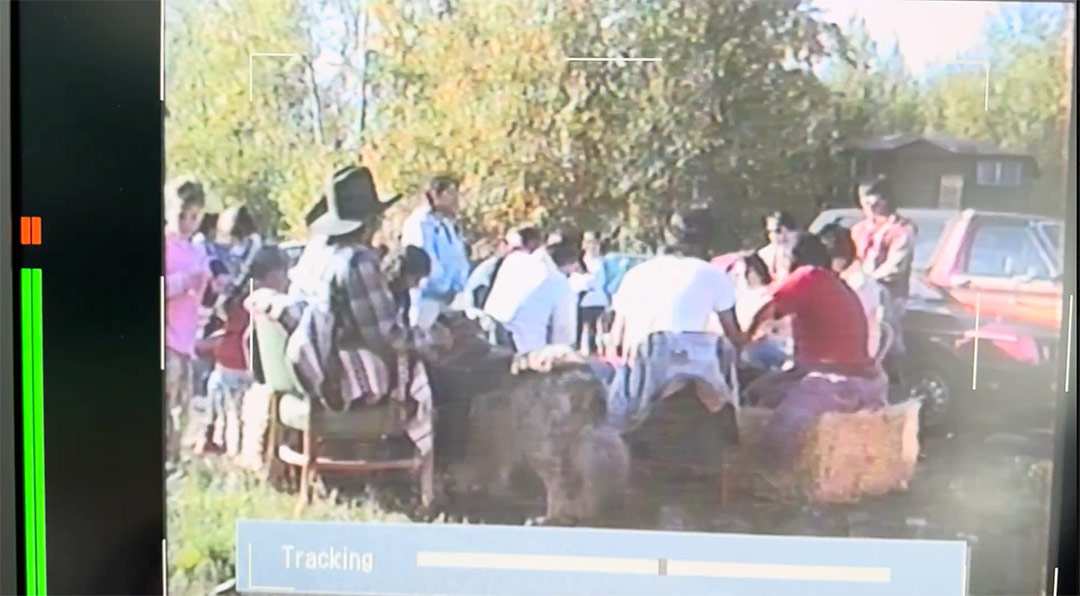
Our Wisdom of the Elders archive continues to grow, with new conversations from our tape collection making their way online – elders speaking in their own words, no interruptions, no filters. There is something about hearing a story the way it was actually told, at the pace it was actually told, that no summary has ever managed to hold.


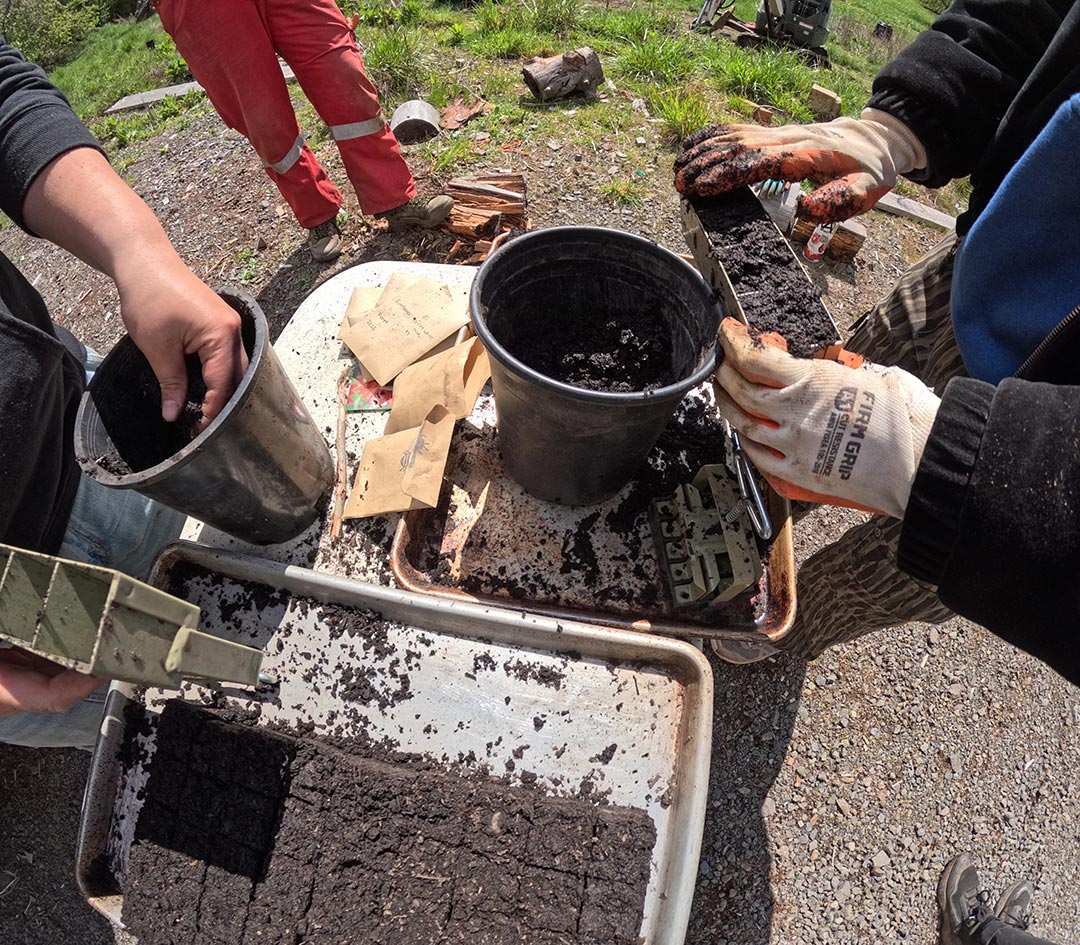
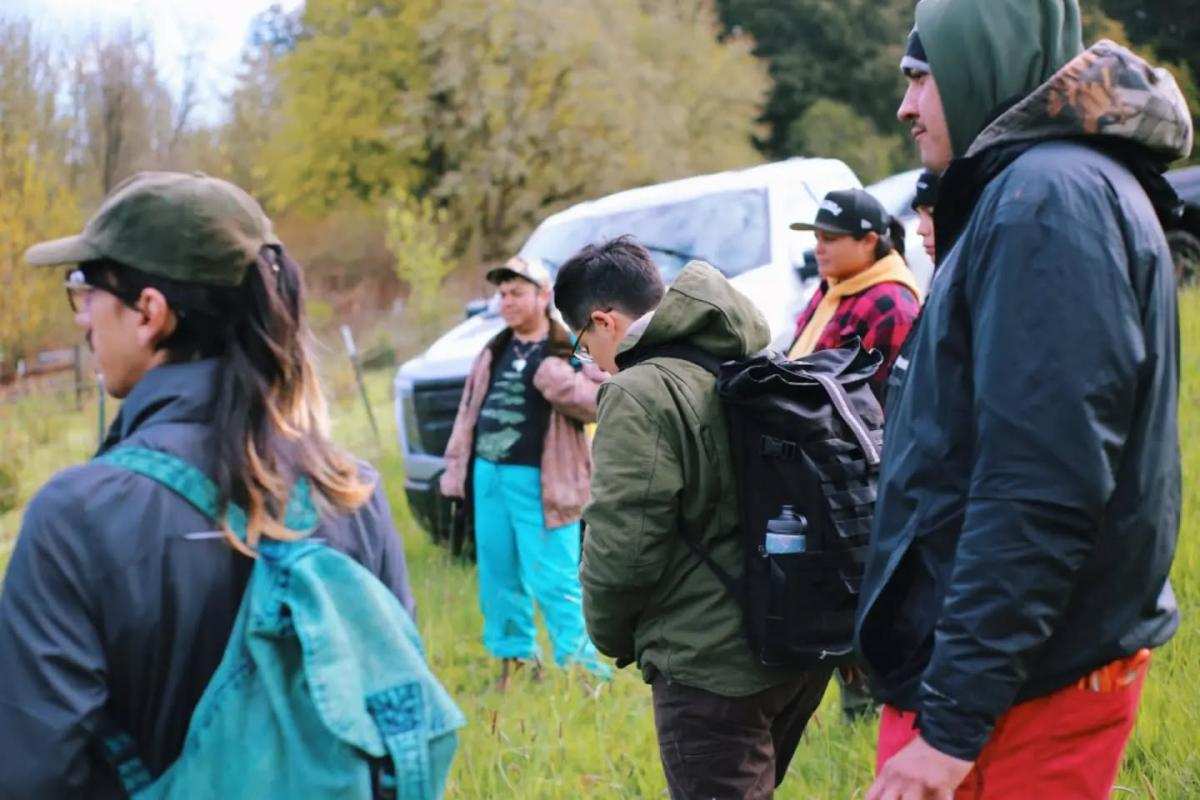
We've also been out in the field this summer with our Indigenous Traditional Ecological Knowledge (ITEK) crew, capturing the land stewardship and ecological knowledge work that grounds so much of what we do.


Stephanie Craig


We spent time with Stephanie Craig, a 7th-generation Kalapuya weaver and an enrolled member of the Confederated Tribes of Grand Ronde, documenting her basket-weaving practice for an upcoming series, Seven Generations of Knowledge, carried in a pair of hands.


Watch The Featured Video
ITEK Partners

It Takes Many Hands

We're also proud to be part of the BRANCH Coalition, a group of organizations working together on invasive species removal, native plant restoration, watershed stewardship, and care of urban green spaces across the Portland area.


Our partners in this work include Portland Parks, Urban Forestry Project, Connecting Canopies, The Blueprint Foundation, Depave, Friends of Trees, Verde PDX, Columbia Slough, POIC, APANO, BPI PDX, and the City of Gresham. It takes many hands to care for this land well, and we're grateful to do so alongside organizations that share the same commitment.


Wisdom Digital Archive Initiative 

Multimedia: Putting 30+ years of Archival footage on the Map

Behind the scenes, we're preparing our full video library for a larger public home so more people can access this work. Our web team is also building out a major piece of our Digital Archive Initiative: an interactive online story map that will let visitors explore our archive by place, connecting oral histories, video, photographs, and traditional ecological knowledge directly to the land they come from.


The stories will no longer live in a list. They will live where they happened so that someone can open the map, find a place they know, and hear an Elder speak about it. It's one of the more ambitious projects we've taken on, and we can't wait to bring it online.


Board of Directors and our Wisdom Radio Program

We're also working closely with our Board of Directors on a full relaunch of our Radio Program, with plans to bring it to every major platform, making it easier than ever to listen wherever you are. Stay tuned; this one's been a long time coming, and we're excited to share more soon.


2026 ITEK Fall Internship

Fall 2026 Indigenous Traditional Ecological Knowledge Internship Enrollment is Now Open!


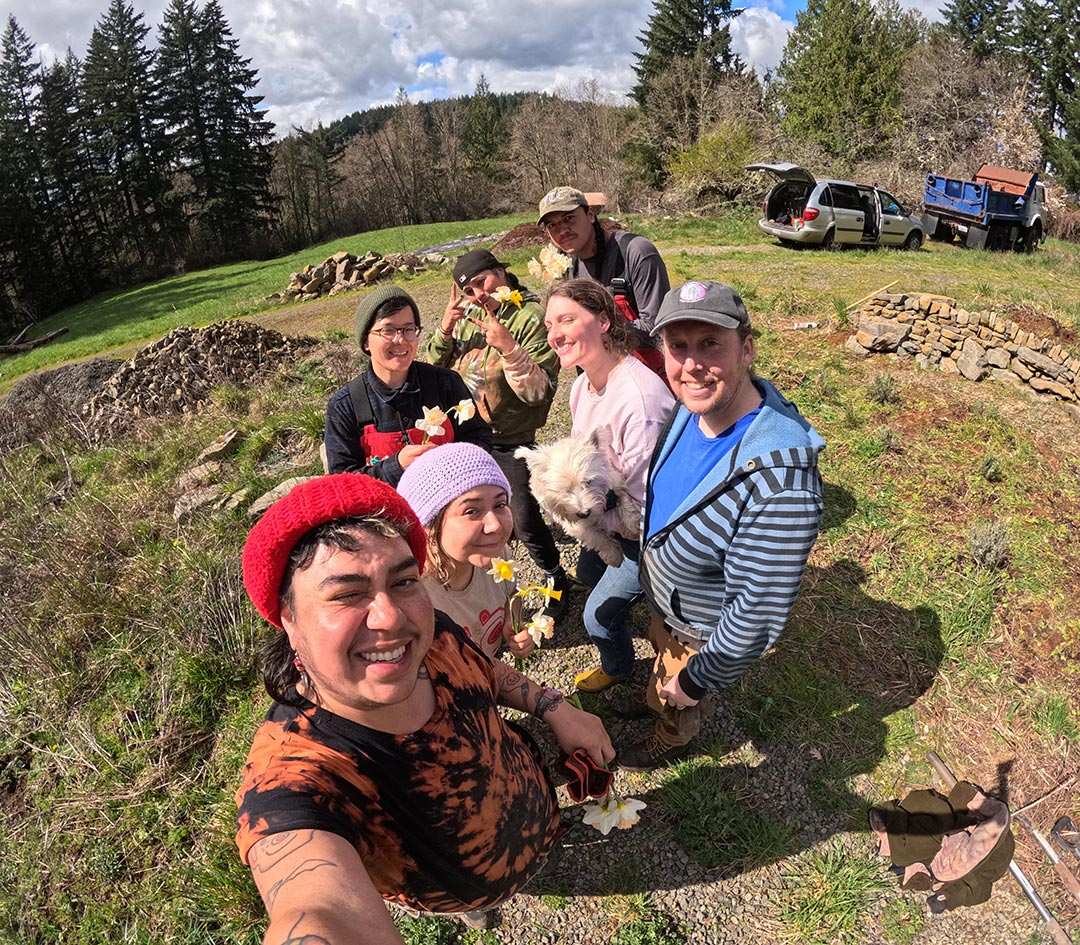
We're excited to announce that enrollment is officially open for our Fall 2026 ITEK Internship, and we can't wait to welcome our next cohort! We're accepting applications from anyone passionate about Environmental Conservation & Restoration and how Wisdom integrates Indigenous Traditional Ecological Knowledge (ITEK) into our work.


This paid 12-week program combines hands-on fieldwork with partner organizations, along with in-person and online sessions covering ITEK, STEAM-related concepts, and Native American cultural arts and plant knowledge. Interns earn $19.00 an hour. It's a hands-on, heart-forward opportunity to build real skills while deepening your connection to land and community.


Spots are limited, so don't wait! 


You can read more about the program here and apply here


Questions are always welcome. Contact 


dawn@wisdomoftheelders.org and carmelina@wisdomoftheelders.org


We can't wait to see who joins us this Fall!


ITEK VIDEO

Save the Date 

Wieden+Kennedy: Dec 5, 2026 

Seeds of Wisdom Event


There's one more thing we've been building toward, and we're glad to finally share it.


Later this year, we'll gather in person for Seeds of Wisdom, our end-of-year fundraiser, hosted at Wieden+Kennedy here in Portland. Wisdom of the Elders is creating an event centered on Indigenous storytelling, environmental stewardship, and workforce development the same three threads that run through everything you've just read. It felt right to bring them into one room.


We're looking for partners who want to support meaningful community impact while helping amplify Native voices and leadership in Portland and beyond. If that sounds like you, or like an organization you're part of, we would love to hear from you. We're building our partner roster now, which means there's still real room to help shape what this evening becomes.


***As a note for those who have supported us through Willamette Week's Give!Guide in past years, we're not part of Give!Guide this season. 


We've Joined Earth Gives


Earth Gives is a nationwide platform connecting donors with organizations advancing solutions for people and the planet.


It is a natural fit for us: our work has always lived where cultural preservation and ecological stewardship meet the archive and the watershed, the storyteller and the seed, and Earth Gives puts that work in front of people across the country who care about both. 


Our end-of-year giving runs through Seeds of Wisdom and Earth Gives and we hope you'll join us there instead.


If you've been looking for a simple way to support what you've read about here, this is it.


Want to stay closer to what we're up to day-to-day? Find us on Instagram, Facebook, and YouTube; more is coming there soon, including TikTok and Threads.


There's more coming this fall. Thank you for being part of it.


Wisdom of the Elders, Inc.

Portland, Oregon

wisdomoftheelders.org


Donate Today

Join Our Community: Follow Us!

We are growing our digital community and want to stay connected with you! Follow us for updates on our latest films, internship applications, and environmental restoration projects across the Portland Metro area.

Copyright @ 2026 Wisdom of the Elders, Inc, All rights reserved.

3917 NE Shaver st. Portland, Oregon 97212